
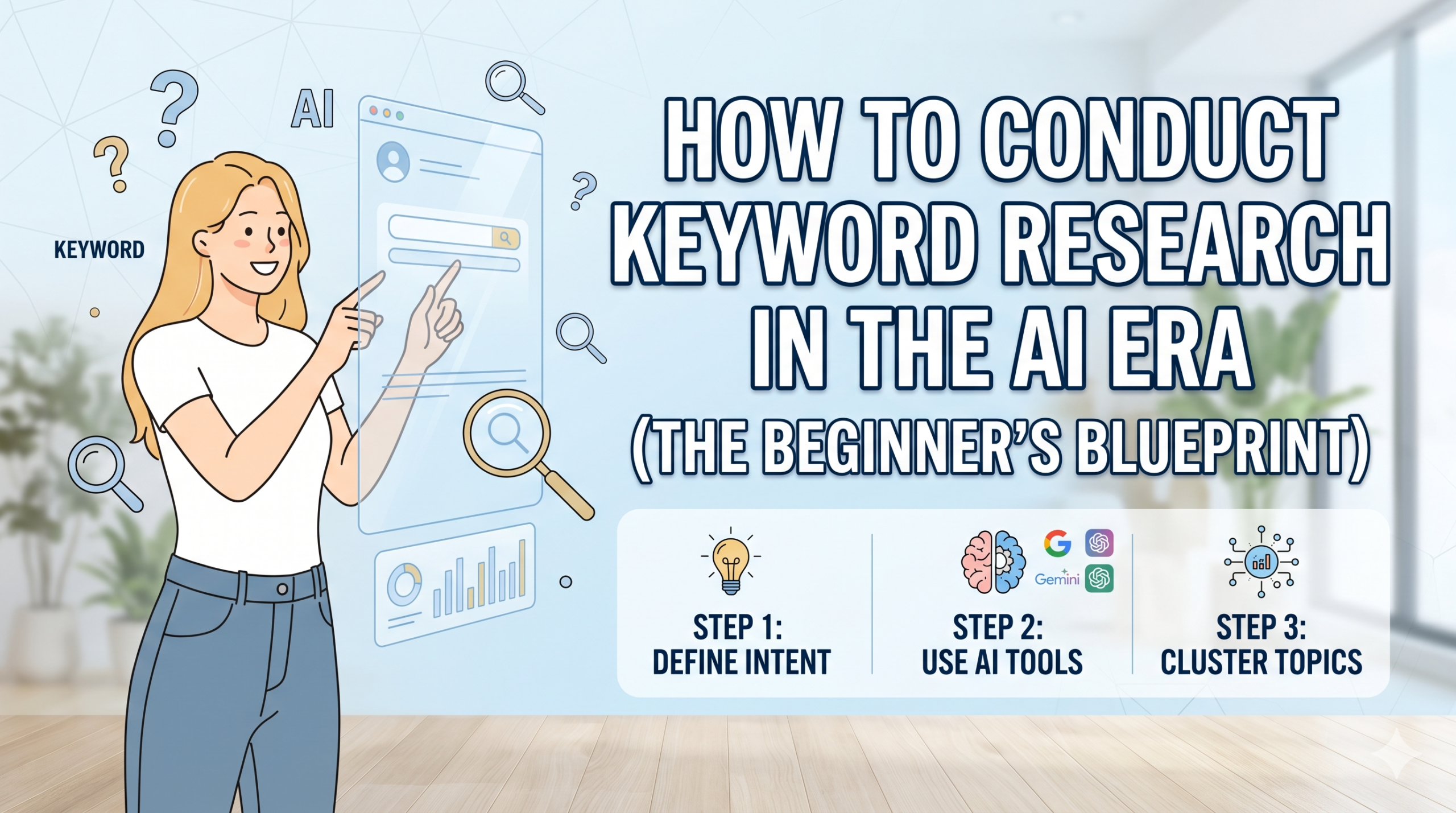
The landscape of SEO has shifted. We are no longer just optimizing for search engines; we are optimizing for Search Generative Experiences (SGE) and AI-driven answer engines. If you are still building spreadsheets based solely on “high volume, low competition,” you’re missing the bigger picture.
In this blueprint, we will break down how to conduct keyword research to stay relevant in an era of conversational search and artificial intelligence.
1. Shift from Keywords to Search Intent
In the AI era, Google’s algorithms (like RankBrain and BERT) understand the meaning behind a query better than ever. Keyword research is now about identifying User Intent.
- Informational: The user wants to learn (e.g., “What is photosynthesis?”).
- Navigational: The user is looking for a specific site (e.g., “Netflix login”).
- Commercial: The user is investigating products (e.g., “Best noise-canceling headphones”).
- Transactional: The user is ready to buy (e.g., “Buy iPhone 15 Pro”).
The AI Strategy: Focus on “Answer Engine Optimization.” Ask yourself: “What specific question is the user trying to solve, and can I provide the most concise, authoritative answer?”
2. Leverage AI Tools for Brainstorming
Gone are the days of staring at a blank screen. Use AI to expand your initial “seed” keywords.
- ChatGPT/Claude: Use prompts like: “Generate 10 long-tail keywords for a boutique coffee roaster focusing on sustainability.”
- Google Gemini: Ask Gemini what related topics are trending in real-time to find “hidden” keywords before they show up in traditional SEO tools.
- Clustering: Use AI to group your keywords into Topic Clusters. Instead of one page per keyword, create one “Pillar Page” supported by several “Cluster Content” pieces.
3. Focus on Long-Tail and Conversational Queries
With the rise of voice search and AI chat, people are typing (and speaking) in full sentences.
- Old Way: “Affordable running shoes.”
- AI Era: “What are the best affordable running shoes for flat feet and marathon training?”
- Old Way (Shorthand): “digital marketing career path”
- AI Era (Conversational): “What are the first steps I should take to transition from a general marketing role into a performance marketing specialist?”
- Old Way (Shorthand): “Google Ads conversion tracking fix”
- AI Era (Conversational): “Why is my Google Ads conversion tag showing ‘inactive’ even though I just installed it via Tag Manager?”
Action Plan: Target “Natural Language” phrases. Use tools like AnswerThePublic or the “People Also Ask” section on Google to find the exact phrasing real humans use.
4. Analyze the “Zero-Click” Reality
AI Overviews often answer a user’s question directly on the Search Engine Results Page (SERP), meaning the user never clicks a link.
To thrive here, you must:
- Optimize for Snippets: Use clear headings and bulleted lists. Use FAQs schema.
- Provide Unique Value: Offer data, personal experiences, or expert opinions that an AI cannot easily replicate or summarize.
- Target High-Complexity Keywords: AI is great at “What is…” but less nuanced at “How should I choose between X and Y based on my specific career goals?”
5. Don’t Ignore Traditional Metrics
While AI is the future, data is the foundation. You still need to verify your “gut feelings” with SEO tools (like Ahrefs, SEMrush, or Ubersuggest).
- Search Volume: Is anyone actually looking for this?
- Keyword Difficulty (KD): Can you realistically rank for this, or is the competition too high?
- Click-Through Rate (CTR) Potential: If the SERP is crowded with ads and AI summaries, is the organic click worth the effort?
Summary Checklist for Beginners
- [ ] Identify your Pillar Topic.
- [ ] Use AI to generate 20–30 long-tail variations.
- [ ] Group keywords by intent (e.g., Put all “How-to” keywords together).
- [ ] Check competition levels using an SEO tool.
- [ ] Write for humans first, but format for AI (clear headers, structured data).
Also read: What Is Local SEO and Why It Matters for Small Businesses
3 thoughts on “How to Conduct Keyword Research in the AI Era: The Beginner’s Blueprint”