
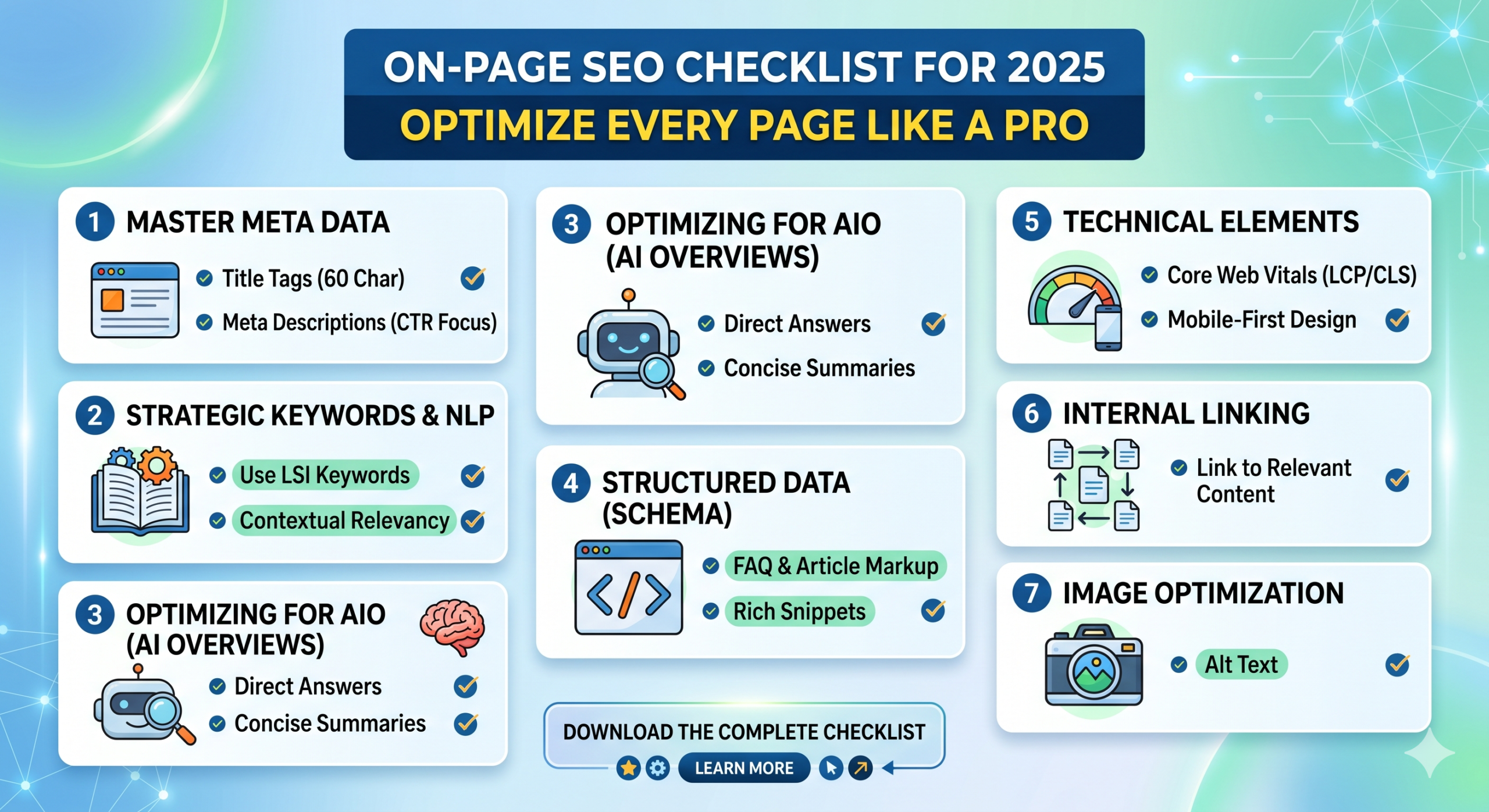
While search engines have become significantly more sophisticated, the foundation of a high-ranking website remains the same: On-Page SEO. In 2026, however, the “Pro” approach isn’t just about keywords; it’s about aligning with Artificial Intelligence Overviews (AIO) and ensuring your content serves both algorithms and humans flawlessly.
1. Master the Foundational Meta Data
Your meta tags are your first impression. They tell both the user and the search engine exactly what the page is about.
- Title Tags: Keep it under 60 characters. Place your primary keyword near the beginning, but ensure it sounds natural.
- Meta Descriptions: Though not a direct ranking factor, a compelling description (under 160 characters) improves your Click-Through Rate (CTR).
- Header Tags (H1-H4): Use a single H1 for your title. Use H2s and H3s to break up the content logically. This helps search engines understand the hierarchy of your information.
2. Strategic Keyword Integration & NLP
In 2025, search engines use Natural Language Processing (NLP) to understand context.
- Primary Keyword: Include it in the first 100 words.
- LSI & Semantic Keywords: Use related terms and synonyms. For example, if your page is about “Digital Marketing,” include terms like “conversion rate,” “SEO,” and “brand awareness.”
- Avoid Stuffing: Write for the reader first. If a sentence feels clunky because of a keyword, rewrite it.
3. Optimizing for AIO (AI Overviews)
AI Overviews are now a central part of the search experience. To ensure your content is cited by AI:
- The “Direct Answer” Paragraph: Early in your post, provide a concise, 2-3 sentence summary or answer to the primary search query.
- Use Structured Data (Schema): Implement FAQ, How-To, or Article schema. This provides a clear map for AI models to extract your data.
- Bullet Points and Tables: AI loves structured data. Use lists to summarize key steps or tables to compare data.
4. Technical On-Page SEO Elements
A page that loads slowly or looks broken on mobile will never rank like a pro.
- Core Web Vitals: Focus on LCP (Largest Contentful Paint) and CLS (Cumulative Layout Shift). Pages should be interactive in under 2.5 seconds.
- Mobile-First Design: Ensure buttons are “thumb-friendly” and text is readable without zooming.
- URL Structure: Keep URLs short, descriptive, and lowercase (e.g.,
/seo-checklist-2025/rather than/p=123/).
5. Media & Internal Linking
- Image Alt Text: Describe the image accurately for accessibility and include a keyword if relevant.
- Internal Links: Link to 2-3 other relevant pages on your site to keep users engaged and spread “link equity.”
- External Links: Linking to high-authority, reputable sources builds trust with both users and search engines.
Summary On-Page SEO Checklist for Every Page:
| Element | Goal |
| Title Tag | Keyword-rich and under 60 chars |
| H1 Tag | Unique and describes the core topic |
| AIO Answer | Direct answer provided in the intro |
| Images | Compressed with descriptive Alt Text |
| Internal Links | At least 2-3 links to related content |
| Schema | FAQ or Article Markup applied |
Also Read: 10 Ways To Optimize Google Business Profile for Local Visibility: A Checklist
2 thoughts on “The Step-by-Step Guide to On-Page SEO: A Checklist”