
Remember when earning the top spot on Google felt like hitting the jackpot? You’d rank number one, sit back, and watch the traffic pour onto your website.
Those days are rapidly changing.
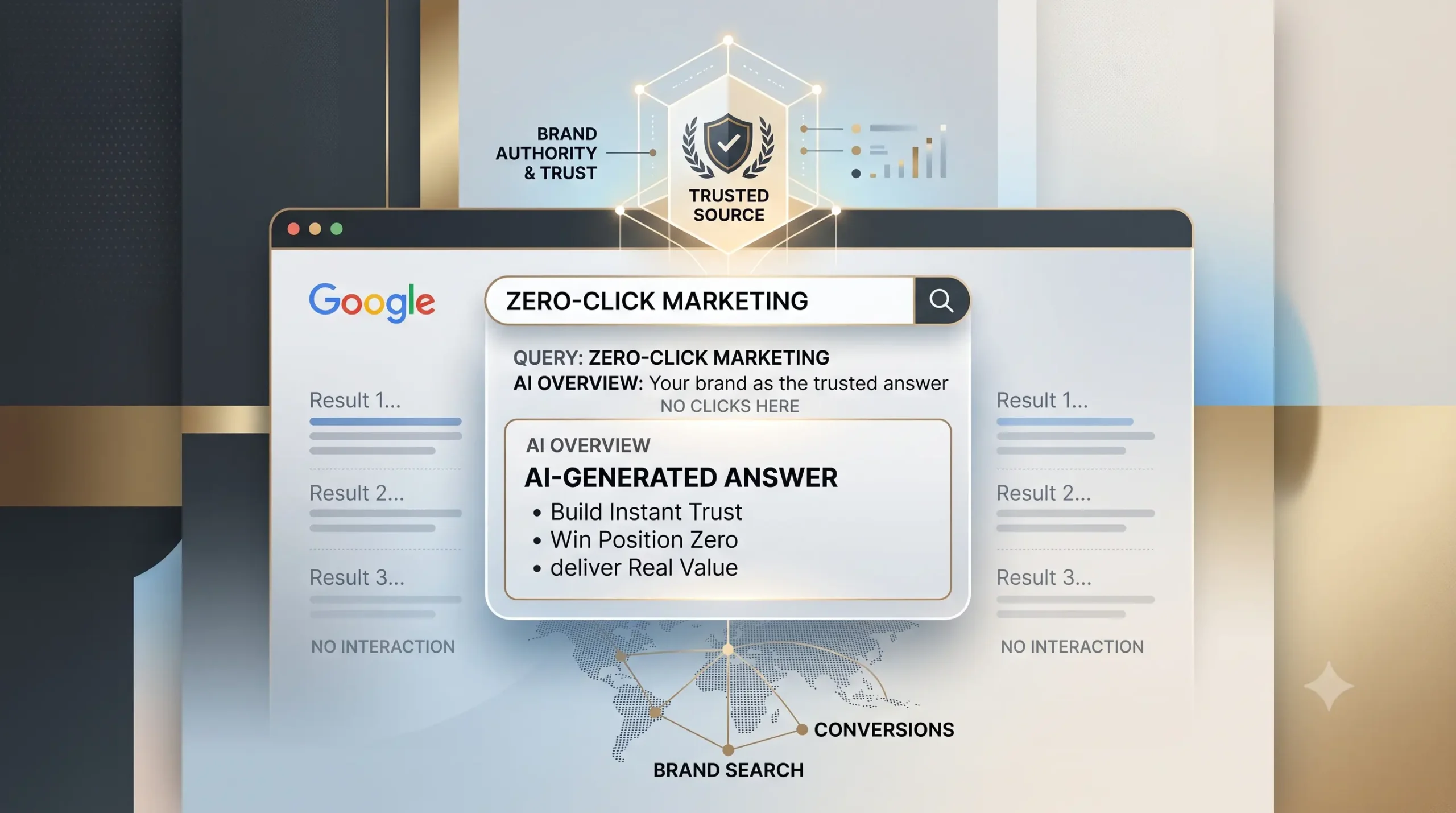
Today, more than 65% of Google searches end without a single click. Between instant answer boxes, rich preview snippets, and AI-generated overviews right at the top of the page, people are getting exactly what they need in seconds—and closing the tab.
To a marketer, this sounds like a nightmare: If nobody is clicking through to our website, how on earth are we supposed to build a business?
Here’s the plot twist: A search without a click isn’t a lost customer; it’s a new opportunity.
This shift toward “zero-click” search doesn’t mean SEO is dead. It just means the game has changed. Instead of desperately begging people to visit your site, the goal now is to make sure your brand is the clear, trusted answer staring them in the face before they even think about clicking away.
In this post, we’ll break down what zero-click marketing actually means, why search engines are pushing for it, and—most importantly—how you can adapt your strategy to stay visible, trusted, and profitable when clicks are no longer guaranteed.
The New Rules of Search Visibility
If users are getting their answers straight from the search results page, how do you make sure your brand is the one providing those answers?
The old SEO rules were built around getting users to visit your website. The new rules are built around making your brand impossible to ignore—wherever the search happens.
Here are three simple shifts to keep your business visible in a zero-click world:
Rule 1: Aim to Be the Source Google Quotes
When someone asks a complex question today, Google’s AI reads dozens of websites, synthesizes the facts, and presents a short summary at the top.
Your new goal isn’t just to rank at the top of the page; it’s to be the source the AI cites in that summary.
- How to do it: Structure your content cleanly. Use clear headers, precise definitions, and straightforward language. When search bots scan your page, they should instantly understand what problem you solve and why you’re an expert.
Rule 2: Win “Position Zero” with Direct Answers
“Position Zero” refers to those featured answer boxes, bulleted steps, and quick definitions that sit right above the traditional search results.
- How to do it: Stop burying the lede. When you write about a topic, answer the core question in 2–3 clear, simple sentences right near the top of the page. Give readers (and search engines) the answer immediately, then use the rest of your article to dive deeper.
Rule 3: Build a Presence Beyond Your Own Website
In a zero-click environment, your potential customers might learn about you through YouTube Shorts, LinkedIn feeds, Reddit discussions, or an AI summary—long before they ever step foot on your website.
- How to do it: Share your best insights directly on native platforms. Don’t hoard your knowledge behind link clicks. When people repeatedly see your brand delivering value right in their feeds, you become the first name they search for when they’re ready to buy.
3 Easy Ways to Build Your Zero-Click Strategy
Adapting to this new style of search doesn’t mean rewriting your entire marketing playbook. It’s mostly about changing how you deliver your message.
Here are three practical tactics you can start using today:
1. Use the “Answer First, Explain Later” Formula
Most blogs are structured like mystery novels—they make the reader scroll through 500 words of background info before finally answering the question. In a zero-click world, that just gets you skipped over.
Flip the script. Under every major heading in your post, provide a 2 to 3 sentence direct summary right away.
- Why it works: If Google’s AI (or a busy reader) only scans those first three lines, they still get full value—and your brand gets credited as the clear authority.
2. Turn Your Brand Name into the Answer
When you consistently show up in zero-click snippets, something interesting happens: people start recognizing your brand name as the go-to resource.
Over time, this changes user behavior. Instead of searching for generic terms like “best SEO tools,” users will skip the comparison phase and search directly for “HubSpot pricing” or “Ahrefs site audit.”
- The goal: You aren’t just trying to win the general search term; you’re building enough trust out in the open that users search for you specifically.
3. Track What Actually Matters (Ditch Pure Click Counts)
If you only judge your marketing success by total website traffic, a zero-click strategy might look like it’s failing. But page views don’t tell the whole story anymore.
Shift your focus to these two metrics instead:
- Brand Search Lift: Are more people typing your company name into Google?
- Direct Conversions: Are the visitors who do reach your site converting at a much higher rate because they already know and trust you?
When your zero-click content does its job, total web traffic might stay flat, but the quality of that traffic—and your bottom-line sales—will go up.
The Mindset Shift: From “Traffic Collector” to “Trust Builder”
For over two decades, digital marketing treated websites like gated toll booths: If you want our value, you have to click our link and land on our site first.
The zero-click era turns that model upside down.
Instead of hoarding your best insights behind a link, start giving real value away right on the search results page or social feed. When you consistently solve small problems for people out in the open—without forcing them through a long multi-step funnel—you build instant trust.
When those same users are finally ready to spend money, they won’t waste time clicking around competitor sites. They’ll go straight to the brand that answered their questions clearly from day one.
Conclusion: Winning the Future of Search
A search without a click isn’t a sign that digital marketing is broken—it’s just a sign that search engines are evolving to save people time.
The brands that struggle in this new environment will be the ones desperately clinging to old tricks, trying to hide answers behind clickbait headlines. The brands that win will be the ones brave enough to answer questions clearly, directly, and generously right out in the open.
Quick Takeaways
- Answer immediately: Put direct 2–3 sentence answers right under your main headings.
- Optimize for citations: Structure your content so clean and logical that AI summaries treat you as their go-to source.
- Focus on brand trust: Measure success by brand search lift and conversion rates, not just raw page clicks.
By shifting your mindset from chasing clicks to building trust, you’ll stay visible, relevant, and profitable—no matter how search engines change next.
Frequently Asked Questions
1. What is a zero-click search?
A zero-click search happens when a user gets their answer directly on the Google results page—via an AI Overview or snippet—and leaves without clicking any website link.
2. Is zero-click search killing SEO?
No, SEO isn’t dead—it’s evolving. Instead of ranking purely to get website clicks, the goal is now to be the trusted brand that Google cites in its instant answers.
3. What is the “Answer First, Explain Later” rule?
It’s a writing style where you answer the main question in 2–3 clear sentences directly under your heading, before diving into detailed explanations below.
4. How do I get my content featured in AI Overviews?
Write clean, well-structured content with clear subheadings, straightforward definitions, and concise answer blocks that AI models can easily summarize.
5. How do I measure success if website traffic goes down?
Focus on Brand Search Lift (more people searching for your company name directly) and Conversion Rates (higher quality leads who already trust your brand).